Court Dogs
The Jury
It is the role of the Jury to decide the facts of the case. Watch the video below to find out more.
Intervention Order Case
Criminal Case
Videos outlining two different cases presented in the Magistrate's Court.
Lawyers
Judges
Juries
Legal Help
Virtual Tours
Take a virtual tour of the Victorian County Court foyer or court room.
The role of courts
When a law is broken, it is up to the courts to find a solution. Courts uphold the law and aim to make sure that justice, or fairness, is done.
The law and society
When people think of courts, they often think of dramatic murder cases, with lawyers dressed in wigs and gowns. But this is only a small part of the story. Legal disputes can happen in the most ordinary places. Neighbours might argue over the need to replace a dividing fence. Drivers might disagree about who caused a road accident. A worker might claim that he or she lost a job unfairly. Disagreements are a part of community life. Instead of leaving people to battle their problems alone, courts can help them to resolve these conflicts.
Principles of justice
These principles include protecting the innocent, being open and honest, and being fair to everyone.
There are some situations, however, when public viewing is not allowed. Children's Court cases are generally not open to the public. This helps to protect the privacy of the children who are found guilty of crimes, because their future might be affected in a negative way if they get a bad reputation from a young age. Cases closed to the public are said to be held in camera. This is a legal expression meaning 'in the room'.
The law and society
When people think of courts, they often think of dramatic murder cases, with lawyers dressed in wigs and gowns. But this is only a small part of the story. Legal disputes can happen in the most ordinary places. Neighbours might argue over the need to replace a dividing fence. Drivers might disagree about who caused a road accident. A worker might claim that he or she lost a job unfairly. Disagreements are a part of community life. Instead of leaving people to battle their problems alone, courts can help them to resolve these conflicts.
Principles of justice
These principles include protecting the innocent, being open and honest, and being fair to everyone.
- Innocent until proven guilty
- Open justice
There are some situations, however, when public viewing is not allowed. Children's Court cases are generally not open to the public. This helps to protect the privacy of the children who are found guilty of crimes, because their future might be affected in a negative way if they get a bad reputation from a young age. Cases closed to the public are said to be held in camera. This is a legal expression meaning 'in the room'.
|
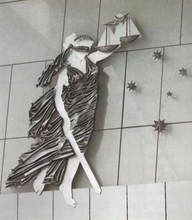
The 'Lady of Justice' on Melbourne's County Court is blindfolded, meaning she is even handed and cannot be influenced. She holds a scale to weigh the evidence, while her sword symbolises authority.
|